

You know that uncomfortable feeling when your stomach feels tight and full. Bloating and flatulence happen to everyone at some point. They can make simple tasks feel hard. This article helps you say goodbye to bloating and flatulence with easy steps.
Bloating means your belly feels swollen from gas or fluid. Flatulence is passing gas from your body. Both come from how your body breaks down food. You can manage them with changes in your daily routine.
Understanding Bloating Flatulence
Common Causes Bloating
Many things lead to bloating in your daily life. Swallowed air is a big one when you eat fast or chew gum. This air builds up in your gut and causes discomfort. Carbonated drinks add more gas to the mix.
Food choices play a key role too. Beans and broccoli contain sugars your body struggles to digest. These sugars ferment in your intestines and produce gas. Dairy can do the same if you lack the enzyme to break it down.
Constipation often worsens bloating for many people. When stool backs up in your colon it leaves less room for gas to pass. This creates pressure and a full feeling in your abdomen. Slow digestion from low fiber makes it happen more.
Hormones affect bloating especially in females. Before your period estrogen causes water retention in your body. This leads to swelling in your belly area. Stress can change how your gut works and add to the problem.
Factors Leading Flatulence
Flatulence comes from gas made in your intestines. Bacteria break down undigested food and release hydrogen and methane. This gas needs to escape through passing wind.
Certain foods increase flatulence for most people. Onions and cabbage have compounds that feed gut bacteria. Artificial sweeteners in diet products do not digest well and cause extra gas.
Medications sometimes contribute to flatulence issues. Antibiotics kill good bacteria in your gut. This imbalance lets gas-producing bacteria grow more. Iron supplements can slow your digestion too.
Lifestyle habits influence flatulence levels. Smoking brings extra air into your system. Sitting for long hours slows your bowel movement. This allows more time for gas to build up.
How Digestion Plays Role
Your digestive system breaks food into nutrients. In the small intestine enzymes handle most work. Undigested parts move to the large intestine where bacteria take over.
Bacteria ferment carbs and fibers there. This process creates gas as a byproduct. A healthy balance of bacteria keeps gas in check. Disruptions lead to more bloating and flatulence.
Motility is how fast food moves through your gut. Slow motility from dehydration or low activity causes backups. Gas gets trapped and builds pressure in your abdomen.
Gut sensitivity varies from person to person. Some feel normal gas amounts as painful bloating. Conditions like IBS make your nerves more reactive to gas stretches.
Signs You Might Notice
You may feel tightness across your abdomen. Clothes fit snugger around your waist. This happens even without weight gain. Burping often comes with it.
Pain can shift around your belly area. It feels sharp or crampy at times. Passing gas brings short relief. But the discomfort returns soon after.
Fullness makes you eat less than usual. You skip meals because of the pressure. Noises from your stomach become more frequent. They sound like rumbling or gurgling.
Sleep gets harder with ongoing symptoms. You wake up feeling better but it worsens during the day. Tiredness builds from poor rest and constant unease.
| Common Symptoms and Causes of Bloating and Flatulence | |||
|---|---|---|---|
| Symptom | Common Cause | How It Feels | Duration |
| Tight abdomen | Swallowed air | Pressure in belly | Hours after eating |
| Crampy pain | Food fermentation | Sharp twinges | Until gas passes |
| Frequent burping | Carbonated drinks | Need to release air | During meals |
| Fullness feeling | Constipation | Hard to eat more | Days if backed up |
| Rumbling sounds | Bacterial imbalance | Gut noises | Ongoing with diet |
| Excessive flatulence | High fiber foods | Frequent passing gas | After specific meals |
| Abdominal distension | Water retention | Visible swelling | 1-3 days |
| Nausea sensation | Slow digestion | Queasy feeling | During bloating episodes |
Daily Habits Reduce Symptoms
Small changes in your routine can ease bloating and gas. You start feeling better within days. Focus on what you do each day. These habits build a stronger digestive health.
Eating Habits That Help
Eat smaller meals throughout the day. This keeps your system from overload. You digest food better without big portions. Aim for three meals and two snacks.
Chew your food well before swallowing. This mixes it with saliva enzymes. Less work for your stomach means less gas. Take your time at each bite.
Sit upright when you eat. Good posture helps food move down properly. Slouching compresses your abdomen and traps air. Relax your body during meals.
Avoid talking much while eating. This reduces air you swallow. Quiet meals let you focus on chewing. Your digestion improves with this simple shift.
Drink Choices Matter
Choose water over fizzy drinks. Bubbles add gas to your gut. Plain water hydrates without extra air. Add lemon for flavor if needed.
Warm teas soothe your digestive tract. They help gas move along. Drink them between meals. This prevents bloating after eating.
Limit alcohol and caffeine intake. Both can irritate your stomach lining. They lead to more gas production. Herbal options work better for relief.
Try drinks at room temperature. Cold ones can shock your system. Warm fluids relax muscles in your gut. This eases flatulence.
Activity Levels Impact Digestion
Move your body each day. Walking helps gas pass through your system. You feel less bloated after a short stroll. Aim for 30 minutes daily.
Incorporate gentle stretches morning and night. They release tension in your abdomen. Twists target your digestive organs. You notice better flow.
Stand up often if you sit a lot. This prevents sluggish digestion. A quick walk around breaks up your day. Your gut thanks you for it.
Build core strength with easy exercises. Planks support your abdominal muscles. Stronger core handles gas better. Start slow to avoid strain.
Stress Management Techniques
Practice deep breathing when stressed. It calms your nervous system. Stress tightens your gut and worsens bloating. Breathe in for four counts.
Try meditation for a few minutes daily. It lowers anxiety linked to digestion. You feel more in control. Apps guide you through sessions.
Keep a journal of your worries. Writing clears your mind. Less mental load means better gut function. You sleep better too.
Spend time in nature to unwind. Fresh air relaxes your body. This reduces flatulence from tension. Make it a weekly habit.
Natural Remedies for Bloating

You can use items from your kitchen to ease symptoms. These remedies work gently on your body. They help say goodbye to bloating and flatulence without harsh effects.
Herbal Teas Provide Relief
Peppermint tea relaxes your intestinal muscles. It lets gas pass more easily. Drink one cup after meals. You feel lighter soon after.
Ginger tea settles your stomach upset. It speeds up digestion process. Grate fresh ginger into hot water. Sip slowly for best results.
Chamomile tea calms inflammation in your gut. It reduces cramping from gas. Have it before bed. You wake up with less bloating.
Fennel tea breaks up gas bubbles. It eases flatulence quickly. Crush seeds and steep them. This works well for daily use.
Essential Oils Ease Discomfort
Dilute peppermint oil in carrier oil. Rub it on your abdomen clockwise. This soothes cramps from bloating. Use it twice a day.
Fennel oil massage targets gas buildup. Mix with coconut oil for application. Gentle circles help release pressure. You notice relief in minutes.
Ginger oil warms your belly area. It improves blood flow to digestion. Apply with light strokes. This reduces flatulence over time.
Lemon oil refreshes your system. Add to water or diffuse it. It supports liver function for better detox. Consistent use helps long term.
Probiotic Foods Balance Gut
Yogurt with live cultures builds good bacteria. It fights gas-causing ones. Eat a small bowl daily. Choose plain to avoid sugars.
Kefir drinks add diverse probiotics. They improve digestion of foods. Start with half a cup. You adapt over a week.
Sauerkraut ferments cabbage for gut health. It breaks down hard fibers. Add to salads sparingly. This prevents bloating from veggies.
Kimchi spices up your meals. It provides enzymes for better breakdown. A tablespoon suffices. You gain from its variety.
Warm Compress Application
Place a warm cloth on your belly. Heat relaxes tight muscles. Leave it for 15 minutes. Gas moves more freely.
Use a heating pad on low setting. It eases pain from bloating. Do this after eating. You avoid discomfort at night.
Soak in a warm bath daily. Add Epsom salts for magnesium. This draws out toxins. Your whole body relaxes.
Combine with breathing exercises. Inhale deeply while applying heat. This doubles the relief. You feel calmer overall.
| Foods to Avoid and Eat for Bloating Relief | |||
|---|---|---|---|
| Foods to Avoid | Why Avoid | Foods to Eat | Why Eat |
| Beans and lentils | Hard to digest sugars | Quinoa and rice | Easy on gut bacteria |
| Carbonated drinks | Add extra gas bubbles | Herbal teas | Soothe digestion gently |
| Broccoli and cabbage | Cause fermentation | Carrots and zucchini | Low gas production |
| Dairy products | Lactose intolerance common | Almond milk | No lactose issues |
| Artificial sweeteners | Feed bad bacteria | Fresh fruits like bananas | Natural sugars digest well |
| Onions and garlic | FODMAP triggers | Cucumber and lettuce | Hydrating low gas |
| Wheat products | Gluten sensitivity | Oats and gluten-free bread | Gentle fiber source |
| Fried fatty foods | Slow digestion | Grilled lean proteins | Quick to process |
Exercises Combat Bloating
Physical movement helps expel trapped gas. You can do these at home. They strengthen your digestive system. Regular practice leads to fewer symptoms.
Walking After Meals
Take a 10-minute walk post eating. It stimulates your intestines. Gas moves out naturally. You feel less full quickly.
Increase your pace slightly. This boosts blood flow to gut. Digestion speeds up. Flatulence decreases with consistency.
Walk outdoors when possible. Fresh air aids relaxation. Stress reduction helps your gut. Make it part of your routine.
Invite a friend along. Social time distracts from discomfort. You stick to it longer. Benefits build over weeks.
Yoga Poses Digestion
Child’s pose stretches your abdomen. It releases pressure from gas. Hold for one minute. Breathe deeply into your belly.
Happy baby pose opens your hips. It eases lower belly bloating. Rock side to side. This massages your intestines.
Seated twist wrings out your gut. It expels trapped air. Switch sides evenly. You feel immediate relief.
Wind-relieving pose targets flatulence. Pull knee to chest alternately. Hold each for 30 seconds. Repeat as needed.
Core Strength Building
Plank pose engages your abs. It supports better posture. Hold for 20 seconds. Build up over time.
Bicycle crunches work oblique muscles. They aid side digestion. Do 10 per side. Rest between sets.
Leg raises tone lower belly. They improve bowel movement. Lie flat and lift slowly. Control the descent.
Russian twists rotate your core. They help gas flow. Use a weight for challenge. Keep feet grounded.
Breathing Exercises Relax
Diaphragmatic breathing fills your lungs fully. It massages your organs. Inhale for five counts. Exhale slowly.
Alternate nostril breathing balances your system. It calms gut nerves. Close one side at a time. Cycle for minutes.
Box breathing steadies your rhythm. Inhale hold exhale hold. Each for four counts. This reduces bloating stress.
Guided imagery combines with breath. Picture calm scenes. Your body responds positively. Digestion improves.
| Yoga and Exercises for Gas Relief | |||
|---|---|---|---|
| Exercise | How to Do It | Benefits | Frequency |
| Walking | 10 minutes post meal | Moves gas out | Daily after eating |
| Child’s pose | Kneel and fold forward | Stretches abdomen | 1-2 minutes twice daily |
| Plank | Hold body straight | Strengthens core | 20-60 seconds daily |
| Diaphragmatic breathing | Breathe into belly | Relaxes muscles | 5 minutes morning and night |
| Wind-relieving pose | Pull knee to chest | Targets flatulence | 30 seconds per side daily |
| Happy baby pose | Lie back knees to chest | Massages intestines | 1 minute daily |
| Seated twist | Sit cross-legged twist | Wring out gut | 30 seconds each side |
| Bicycle crunches | Alternate knee to elbow | Tones obliques | 10 reps each side |
When Seek Medical Help for Bloating?
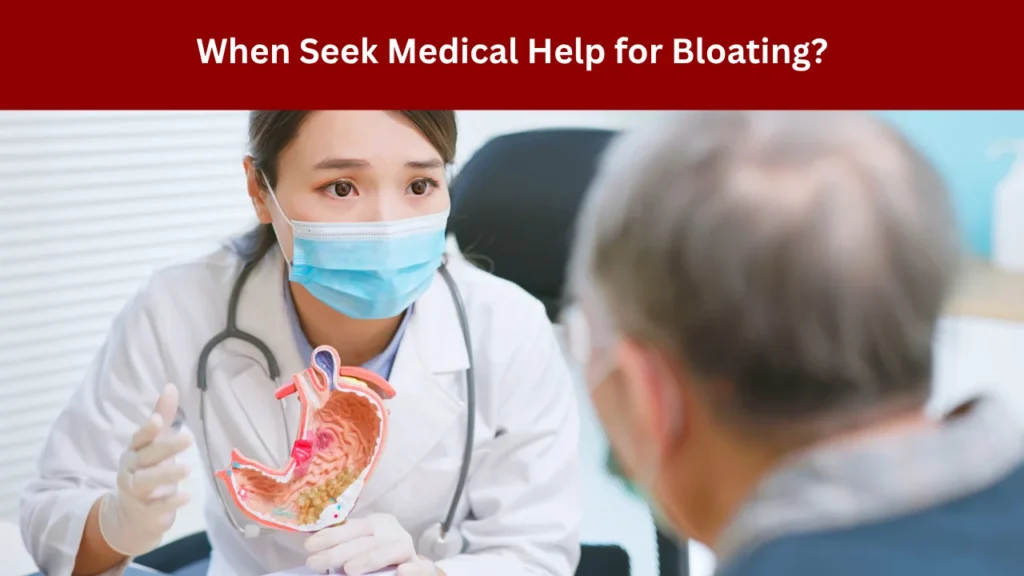
Pay attention to your body signals. Some bloating is normal but changes need checking. You protect your health this way. Early action prevents bigger issues.
Persistent Symptoms Watch
If bloating lasts over a week see your doctor. It might point to deeper problems. Track how often it happens. Note what you ate before.
Pain that does not go away needs attention. Sharp aches could mean blockages. Do not ignore them. Get checked soon.
Weight loss without trying is a red flag. It links to digestive disorders. Measure your weight weekly. Report sudden drops.
Changes in bowel habits matter. Diarrhea or constipation with bloating signals issues. Keep a log. Share details with your provider.
Accompanying Signs Concern
Fever with bloating suggests infection. Take your temperature if unsure. Seek care if elevated. It could be serious.
Vomiting often means something blocks your system. Count episodes in a day. Dehydration adds risk. Get help quickly.
Blood in stool is urgent. It shows internal bleeding. Check toilet paper. Dark stools count too. Call your doctor right away.
Chest pain might mimic heart issues. Bloating can press upward. Describe it clearly. Better safe than sorry.
Underlying Conditions Check
Family history of gut diseases matters. Share it with your doctor. Tests might be needed. Early detection helps.
Medications could cause symptoms. List what you take. Adjustments might solve it. Ask about side effects.
Allergies or intolerances need testing. Breath tests diagnose them. Results guide your diet. You avoid triggers better.
Hormonal issues in females require checks. Track cycles with symptoms. Treatments balance things. Relief follows.
Professional Advice Benefits
Doctors offer tailored plans. They rule out serious causes. You gain peace of mind. Follow up as suggested.
Tests like ultrasounds show internals. They spot growths or inflammation. Prep as instructed. Results come fast.
Dietitians help with food plans. They incorporate your likes. You stick to changes. Symptoms fade over time.
Therapy addresses stress links. It teaches coping skills. Your gut responds well. Overall health improves.
Preventive Measures Long Term
Building good habits keeps bloating away. You enjoy more comfort daily. These steps support your digestive health. Consistency brings lasting change.
Diet Adjustments Sustain
Balance fiber from whole foods. Veggies and grains provide it naturally. Mix soluble and insoluble types. Your gut adapts smoothly.
Include fermented foods regularly. They boost good bacteria. Yogurt and pickles work well. Small amounts prevent overload.
Hydrate with at least eight glasses water. It softens stool for easy passage. Add fruits for natural flavor. Avoid sugary drinks.
Monitor portion sizes at meals. Use smaller plates to guide you. You eat until satisfied. No room for excess gas.
Lifestyle Changes Maintain
Exercise most days of week. Mix cardio and strength. It keeps motility steady. You feel energized too.
Sleep seven to nine hours nightly. Rest allows gut repair. Set a routine. Avoid screens before bed.
Manage weight through balance. Steady levels prevent abdominal pressure. Track progress monthly. Adjust as needed.
Quit smoking if you do. It reduces swallowed air. Your lungs and gut benefit. Seek support groups.
Supplements Support Digestion
Probiotics daily restore balance. Choose strains for gas relief. Capsules or foods both work. Consult for best type.
Enzymes help break down foods. Take before tricky meals. Beans become easier. Flatulence drops.
Magnesium relaxes muscles. It aids bowel regularity. Food sources like nuts preferred. Supplements if low.
Vitamin D supports gut lining. Sun exposure helps too. Test levels yearly. Adjust intake accordingly.
Monitoring Progress Tracks
Keep a symptom diary. Note foods and feelings. Patterns emerge over time. Adjustments become clear.
Weigh benefits of changes. Less bloating means more energy. You enjoy activities again. Celebrate small wins.
Share updates with friends. Support keeps you motivated. They might join in. Group efforts succeed.
Review monthly for tweaks. Life changes affect digestion. Stay flexible. Your body guides you.
| Home Remedies and Their Benefits | |||
|---|---|---|---|
| Remedy | Main Ingredient | How It Helps | Usage Tip |
| Peppermint tea | Peppermint leaves | Relaxes intestines | After meals |
| Ginger drink | Fresh ginger | Speeds digestion | Morning sip |
| Probiotic yogurt | Live cultures | Balances bacteria | Daily snack |
| Warm compress | Heat pad | Eases cramps | 15 minutes |
| Fennel seeds | Fennel | Breaks gas bubbles | Chew post eat |
| Chamomile tea | Chamomile flowers | Reduces inflammation | Before bed |
| Lemon water | Fresh lemon | Aids detoxification | Morning empty stomach |
| Abdominal massage | Coconut oil | Moves trapped gas | Clockwise circles |
FAQs
What causes bloating after eating?
Bloating after meals often comes from swallowed air or hard-to-digest foods. You can reduce it by eating slowly and choosing easier options. Track triggers to avoid them.
How can I relieve gas quickly?
Walking or yoga poses help release trapped gas fast. Herbal teas like peppermint work too. You feel better in minutes with these steps.
Is flatulence normal every day?
Passing gas 10 to 20 times daily is common. More might mean diet changes needed. You can adjust foods to lower it.
When should I worry about bloating?
If bloating lasts weeks or comes with pain seek help. Weight loss or blood are serious signs. You benefit from early checks.
Can stress cause more flatulence?
Stress affects your gut nerves and increases gas. Breathing exercises calm it down. You notice less symptoms with relaxation.
Summary
You now have tools to say goodbye to bloating and flatulence. Understand causes like diet and habits. Use remedies such as teas and exercises. Make changes for better digestive health. Tables guide your choices. Seek help if needed. These steps bring comfort and ease.

Dr. Max is a dedicated medical professional with extensive experience in health and wellness. His approach blends clinical expertise with the latest research, offering practical insights to help individuals lead healthier, more balanced lives.